



In recent years, the world of mindfulness has been undergoing a profound transformation.
Across mindfulness training, meditation teaching, and wellbeing programmes, there has been a growing recognition that mindfulness must evolve to meet the diverse realities of human experience. Conversations around trauma-informed practice, neurodiversity, accessibility, LGBTQIA+ inclusion, and cultural sensitivity are no longer happening at the margins — they are becoming central to the future of mindfulness itself.
This shift is not about abandoning mindfulness traditions. Rather, it is about deepening our understanding of what compassion, awareness, and ethical practice truly mean in a modern world.
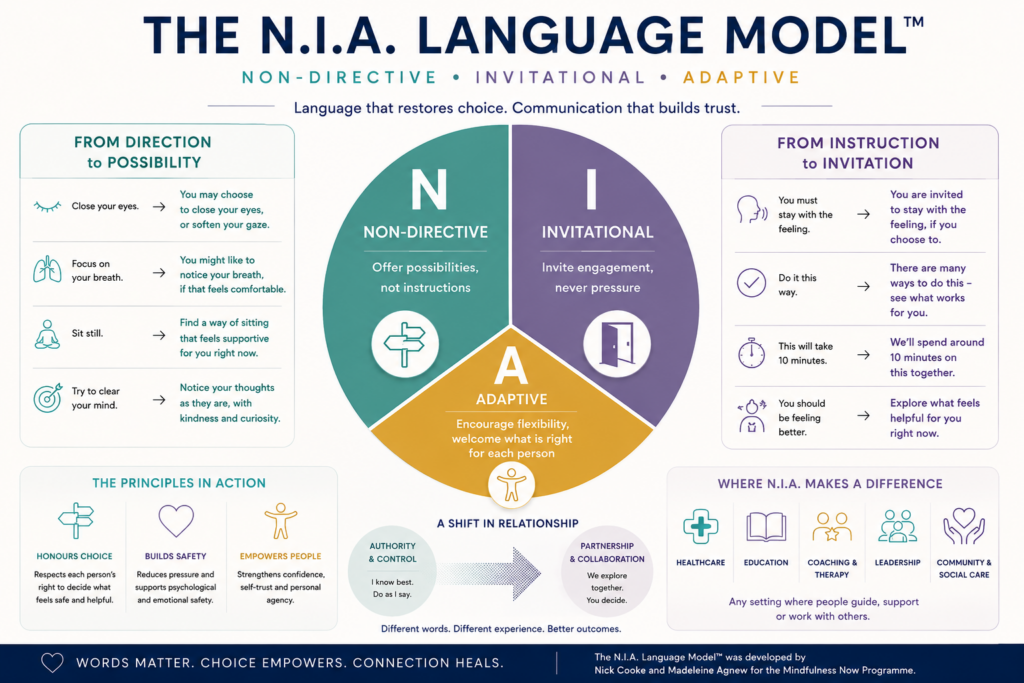
For many years, mindfulness was often taught using a “one-size-fits-all” approach. Participants were frequently encouraged to sit still, focus inwardly, and engage with practices in very specific ways. While these approaches have been deeply beneficial for many people, others began sharing experiences of discomfort, overwhelm, exclusion, or even re-traumatisation.
As more voices entered the conversation, the mindfulness community began to listen more carefully.
Today, there is growing awareness that mindfulness must be adapted thoughtfully and compassionately for people with different needs, backgrounds, identities, and nervous systems.
This includes:
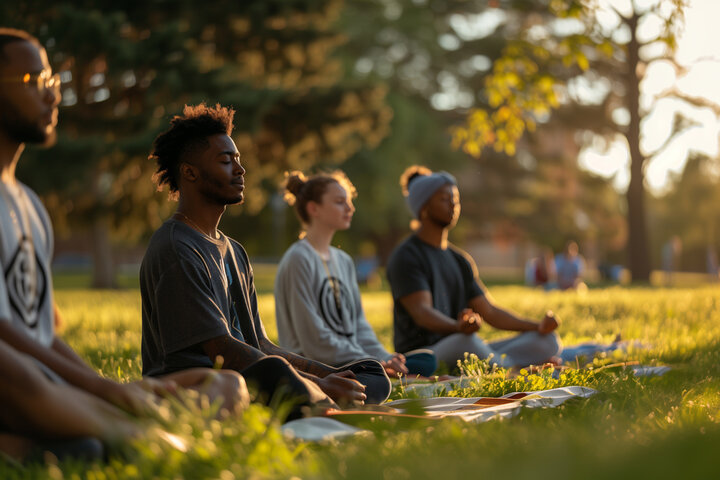
These developments are not weakening mindfulness practice — they are helping it become more humane, responsive, and inclusive.

External Resources:
One of the biggest changes within mindfulness training has been the growing emphasis on trauma awareness.
Research in neuroscience, psychology, and somatic therapies has helped us understand that mindfulness practices can sometimes activate difficult emotional or physiological responses in people with trauma histories. Practices such as prolonged silence, body scans, or sustained inward attention may not always feel safe or regulating for everyone.
Trauma-informed mindfulness does not reject mindfulness practice. Instead, it invites teachers to offer greater choice, flexibility, pacing, grounding, and emotional safety within sessions.
This may include:
Organisations such as the Trauma-Sensitive Mindfulness Institute and researchers including Dr David Treleaven have helped bring these conversations into mainstream mindfulness teaching.
Another important shift has come from neurodivergent communities asking to be meaningfully included within mindfulness spaces.
Autistic people, people with ADHD, dyslexia, dyspraxia, sensory processing differences, and other neurodivergent experiences may engage with mindfulness differently. Traditional teaching styles that rely heavily on long periods of stillness, verbal processing, or internal awareness may not work equally well for everyone.
Increasingly, mindfulness teachers are recognising the importance of adapting practices to suit different nervous systems and learning styles.
This might include:
At its heart, mindfulness is about awareness and compassion — not conformity.
Accessibility should never be seen as “watering down” mindfulness. Rather, it reflects the very essence of mindful practice: meeting people where they are with kindness and understanding.
External Resources:
The mindfulness world is also becoming more aware of the importance of genuinely inclusive spaces for LGBTQIA+ individuals and communities.
Mindfulness teaching cannot fully embody compassion if people feel unseen, unsafe, or unable to be themselves within practice spaces. Inclusive mindfulness means recognising the impact that discrimination, stigma, minority stress, and exclusion can have on wellbeing and mental health.
For mindfulness teachers and organisations, this may involve:
True mindfulness asks us to cultivate compassion not only inwardly, but relationally and collectively as well.
External Resources:
These conversations are increasingly shaping how mindfulness training courses and 8-week mindfulness programmes are delivered.
Traditional programmes such as:
remain highly respected and evidence-based approaches. However, many mindfulness teachers and training organisations are now thoughtfully adapting these programmes to become more trauma-aware, accessible, and inclusive.
This shift may include:
Importantly, these changes are often emerging not from a rejection of traditional mindfulness teachings, but from a deeper understanding of how to apply mindfulness ethically and compassionately in contemporary society.
At Mindfulness Now, we believe mindfulness training should be accessible to all people — regardless of learning style, identity, trauma background, or life experience.
As mindfulness evolves, many teachers and practitioners understandably ask an important question:
How do we adapt mindfulness without losing the integrity of the traditions it comes from?
This is a conversation that deserves care and humility.
Mindfulness has roots in ancient contemplative traditions that carry profound wisdom and ethical depth. These traditions should be acknowledged and respected. At the same time, mindfulness has always evolved across cultures, contexts, and generations.
Perhaps the future of mindfulness is not about choosing between tradition and inclusion.
Perhaps it is about learning how to hold both.
To remain rooted in the heart of mindfulness — compassion, awareness, non-harming, and human connection — while continuing to listen deeply to the changing needs of the communities we serve.
No teacher or organisation will get everything perfectly right. We are all learning together.
But if mindfulness is truly about reducing suffering, then inclusion, accessibility, and humility must remain part of the path forward.